
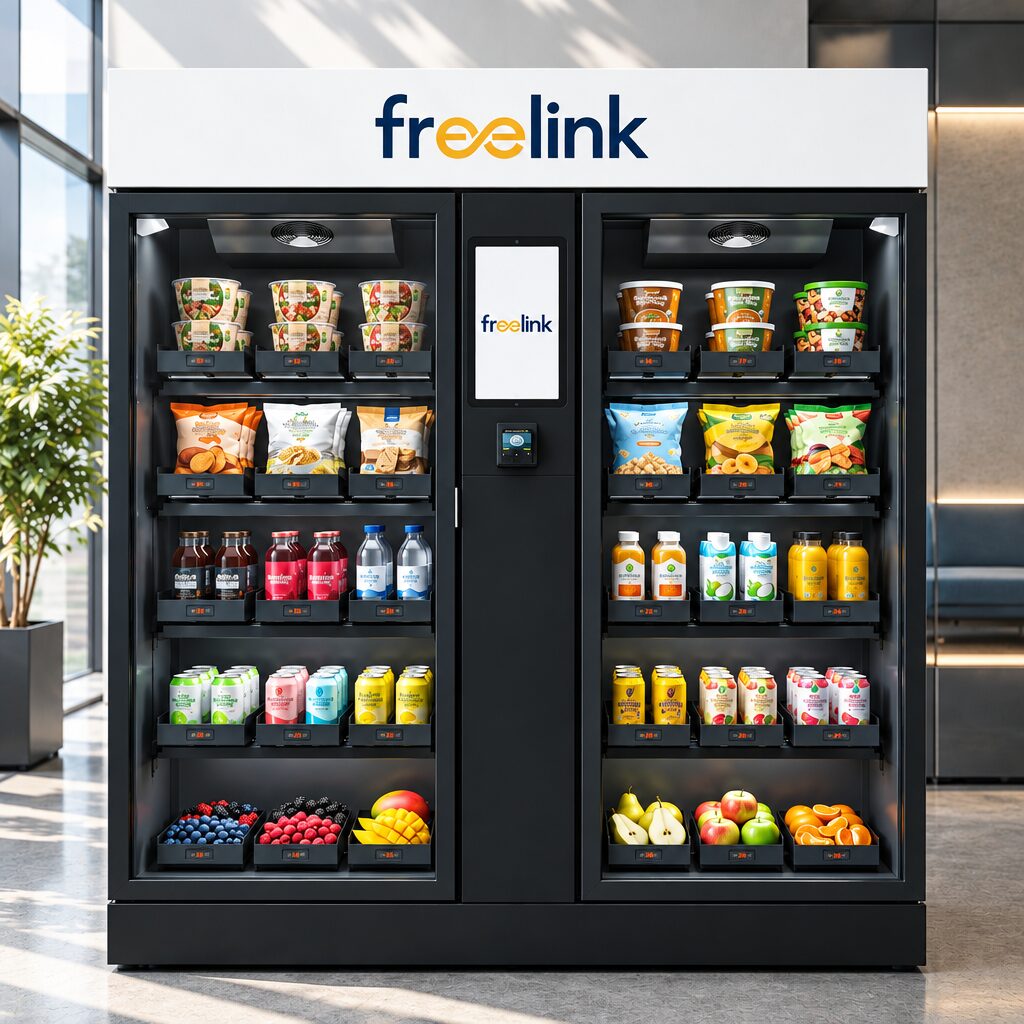
Both micro markets and traditional vending machines put food and drinks where your people are. The right choice for your space depends on three things: how much room you have, how many people you serve, and how much variety they expect.
What a traditional machine does best
Traditional vending is compact and predictable. It fits in a hallway corner, needs nothing more than a power outlet, and serves the reliable favorites — drinks, snacks, and single-serve items — around the clock. For smaller teams or tight spaces, it’s still the most efficient option there is.
What a micro market adds
A micro market trades the glass front for open shelves, coolers, and a self-checkout kiosk. That unlocks a much wider range: fresh salads and sandwiches, ready-to-heat meals, premium drinks, even personal care items. It feels less like a machine and more like a small store your team walks through — which is exactly why larger sites love it.
The honest trade-offs
Micro markets need more floor space and enough daily traffic to keep fresh items moving. Traditional machines cap out on variety. Many workplaces land on a combination: a micro market in the main break area, with vending machines covering secondary floors and off-hours zones.
A simple rule of thumb
Under roughly 50 people on site, start with smart vending. Over 100 with a dedicated break area, a micro market usually pays for itself in satisfaction alone. In between, look at your space and your culture — and don’t be afraid to mix both.
Leave a Reply